


SHC Industry Resources
Garson & Shaw's Resources

2025
Secondhand Clothing Imports from the United States to Guatemala: A Study of trade, distribution, and local impact.
Download Here
2024
Promoting the Circular Textile Industry: A call for strategic policy action in the Americas.
Download Here
Additional Reports
Value Chain of the SHC Industry
This report aims to quantify the socioeconomic impacts of the SHC industry. More specifically, it analyses the socioeconomic impact of the SHC industry in the European Union and the United Kingdom (EU27+), as well as in three selected African countries: Ghana, Kenya, and Mozambique.
Download Here
California Textiles EPR Study
The economic and environmental benefits of successful diversion are significant. With an estimated 85 jobs supported per 10,000 tons of textiles reuse, diverting 10% of current disposed textile tonnage would support over 1,000 jobs and diverting 24% would
Download Heregenerate almost 2,500 jobs.
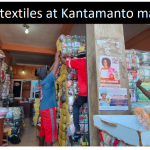
Used textiles at Kantamanto market
The purpose of this document is to provide insights and an enhanced understanding regarding the handling of used textiles in the vicinity of the Kantamanto market in Accra, Ghana.
Download HereImprovements in knowledge, derived from this study of multiple parameters, will aid the development and piloting of recycling. This recycling will improve the circular economy, reduce waste, as well as reduce emissions and conserve resources.
An evaluation of the socio-economic and environmental impact of the second-hand clothes trade in Ghana
The second-hand clothing (SHC) trade in Ghana serves as a cornerstone of the nation’s retail landscape, deeply ingrained in its cultural and economic fabric. A vast majority of Ghanaians consume SHC, at least 95% of the population.
Download Here
Job Creation in Africa’s Second-hand Clothing Sector
This research demonstrates that the second-hand clothing (SHC)
Download Heresector provides millions of people in Africa with accessible and flexible employment. As such the sector acts as an important driver of employment opportunities in African labour markets which otherwise remain almost wholly dependent on non-mechanised agriculture.
The State of Second-Hand Clothes and Footwear Tradein Kenya
Kenya is one of the largest importers of second-hand
Download Hereclothes in Sub-Saharan Africa because of its use and export to other countries. The second-hand clothes industry contributes to government revenues. The existence of second-hand clothes is a demand-side issue rather than a supply-side issue. For a considerable number of people, incomes in the country can only support the buying of second-hand clothes. This is a reflection on incomes rather than whether the supply of new clothes and footwear is available.
The global production networks of the second-hand clothing industry: Impact on Africa
The purpose of this report is to assess the strategic importance of
Download Herethe global second-hand clothing industry for Africa and to make
recommendations for the development of the second-hand clothing sector for the future.