


Why We Can’t Innovate Our Way Out of Fashion Overproduction
Rethinking Fashion’s Waste Crisis: Addressing Overproduction at the Source
In a recent Sourcing Journal thought leadership article, Garson & Shaw CEO, Lisa Jepsen, brings much-needed attention to one of the most pressing challenges facing the fashion industry today: overproduction. While innovation in recycling and waste management continues to advance, the reality remains that these downstream solutions cannot fully address a problem that begins much earlier in the value chain.
The global fashion industry has increasingly focused on end-of-life strategies—investing in textile recycling technologies, circular design, and waste reduction initiatives. While these efforts are important, they often overlook the root cause: the sheer volume of clothing being produced and consumed at unprecedented rates. Without addressing overproduction, even the most sophisticated recycling systems will struggle to keep pace.
Lisa Jepsen emphasizes the need for a fundamental shift in perspective. Rather than relying solely on innovation to manage waste after it is created, the industry must take responsibility upstream—rethinking production volumes, extending product lifecycles, and prioritizing reuse.
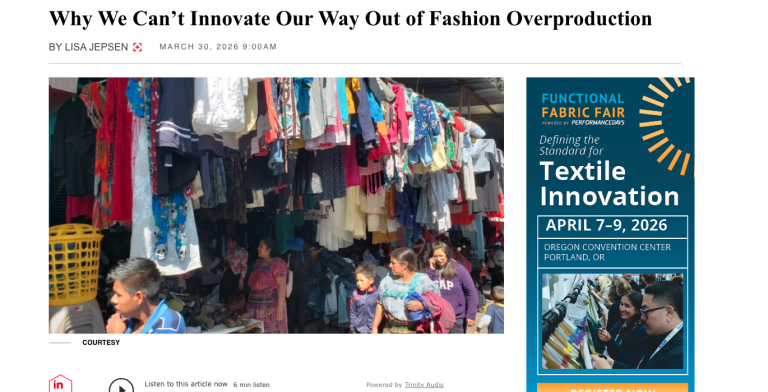
At Garson & Shaw, this principle is central to our mission. The secondhand clothing sector plays a critical role in advancing a circular textile economy by ensuring garments are reused and remain in circulation for as long as possible. Reuse not only reduces the demand for new production but also conserves resources, lowers carbon emissions, and minimizes textile waste.
Creating a truly circular system requires more than incremental change. It demands a collective effort from brands, manufacturers, policymakers, and consumers to address the systemic drivers of waste. This includes embracing transparency, implementing accountability measures, and supporting global reuse networks that extend the life of clothing.
As the conversation around sustainability evolves, it is encouraging to see increased recognition of the need to tackle overproduction head-on. By shifting focus to upstream solutions and reinforcing the value of reuse, the industry can move closer to a more responsible and sustainable future.
At Garson & Shaw, we remain committed to driving this dialogue forward and advocating for practical, impactful solutions that prioritize reuse before recycling.